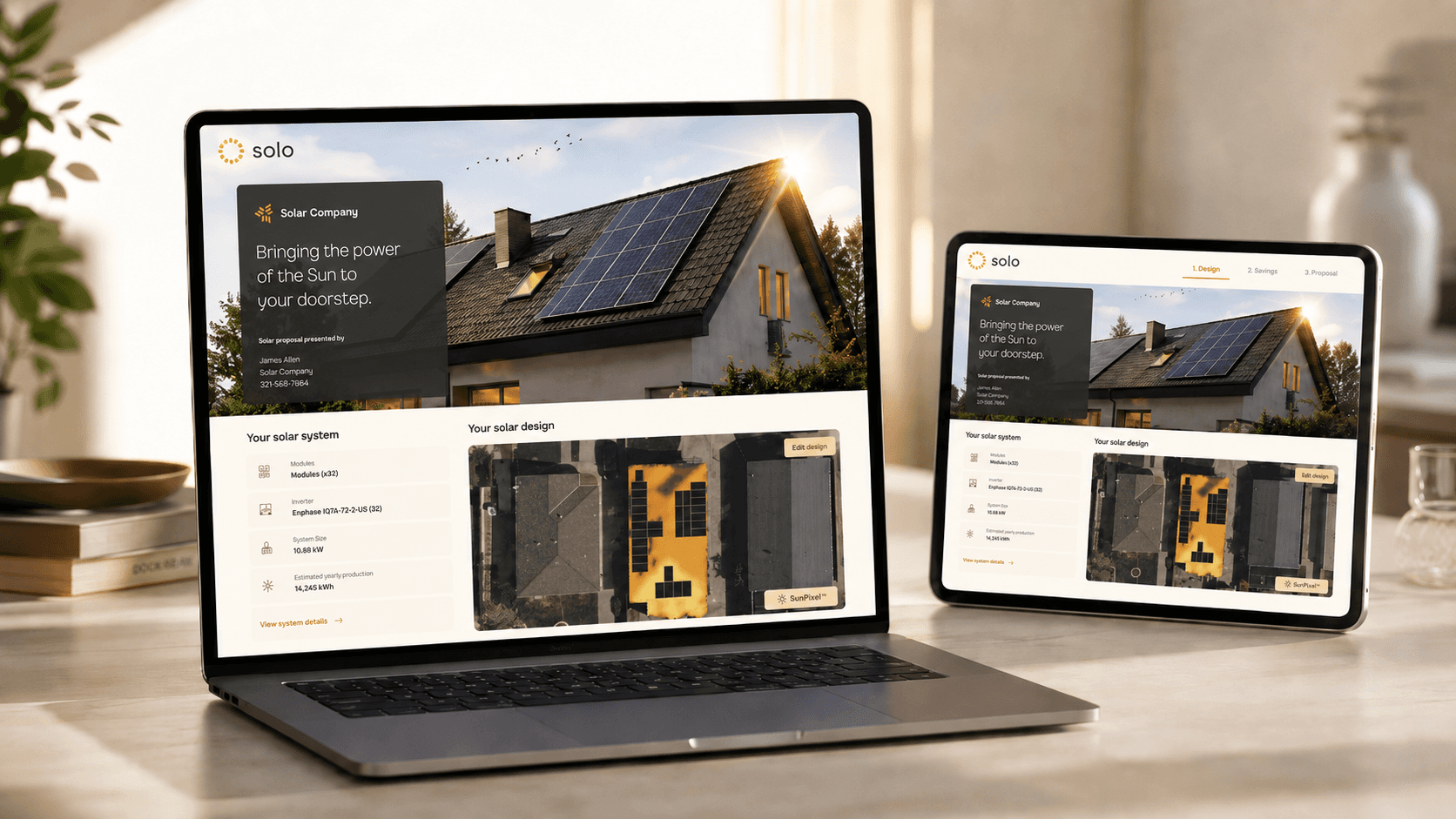
Led UX for Solo’s real-time solar proposal platform while building and leading the UX team
Turning a static sales document into a real-time decision tool.
Solo helps solar companies create real-time proposals for homeowners. The product sits inside a high-stakes sales conversation where reps need to explain system design, savings, production, financing, and long-term value clearly.
My work focused on turning the proposal experience from a static document into a real-time decision tool. I led product design across the proposal experience, built reusable design patterns, helped create the design library, and supported the growth of the UX team.
Leading product UX while helping grow the design function.
I led UX across the proposal experience while helping grow the design function inside Solo.
My role included:
- Leading UX for the updated proposal experience.
- Building and managing the UX team.
- Creating reusable design patterns and a shared design library.
- Improving the live sales flow for reps and homeowners.
- Partnering with product, engineering, leadership, and sales stakeholders.
- Mentoring designers.
- Establishing reusable patterns and creating a design library
The proposal experience carried too much friction for a live sales environment.
The existing proposal experience carried too much friction for a live sales environment.
Sales reps needed to move quickly, but proposal updates often created delays. Homeowners needed confidence, but the information was dense and hard to interpret. Internal teams needed consistency, but the product lacked a scalable design foundation.
Core challenges included:
- Static proposal flows slowed down live sales conversations.
- Reps needed more control while sitting with homeowners.
- Customers struggled to connect system design, production, financing, and savings.
- Product patterns were inconsistent across the experience.
- The UX team needed structure, direction, and a stronger design foundation.
Use this area for early proposal screenshots, abstracted flows, old structure, sales journey maps, or before-and-after comparisons.
The proposal needed to behave like a sales conversation, not a document.
The key shift was simple: the proposal could not behave like a document. It needed to behave like a sales conversation.
That meant the experience needed to support real-time changes, clear visual hierarchy, faster comprehension, and modular control.
Strategic design principles:
- Speed without chaos. Reps needed fast editing, but the interface had to stay controlled.
- Clarity over density. Homeowners needed the right detail at the right moment.
- Visual trust. Roof layouts, panels, savings, and production had to feel understandable, not abstract.
- Systems over screens. The work needed reusable components, repeatable patterns, and a stronger product language.
Building reusable patterns for a more scalable product.
As the product grew, consistency became a product problem, not just a visual one.
I helped create a design library that gave the UX team reusable patterns for proposal pages, controls, data display, forms, navigation, and sales presentation flows.
The design library helped the team move faster, make better product decisions, and create a more consistent experience across the platform.

Helping the UX team mature alongside the platform.
Alongside the product work, I helped build and lead the UX team at Solo. This meant creating structure around how design work moved from problem framing to exploration, prototype, review, and delivery.
I helped designers align around shared patterns, stronger critique, clearer handoff, and a more consistent product experience.
This part of the work mattered because Solo was not just redesigning a proposal. The company was building a platform, and the UX team needed the systems and habits to support that growth.
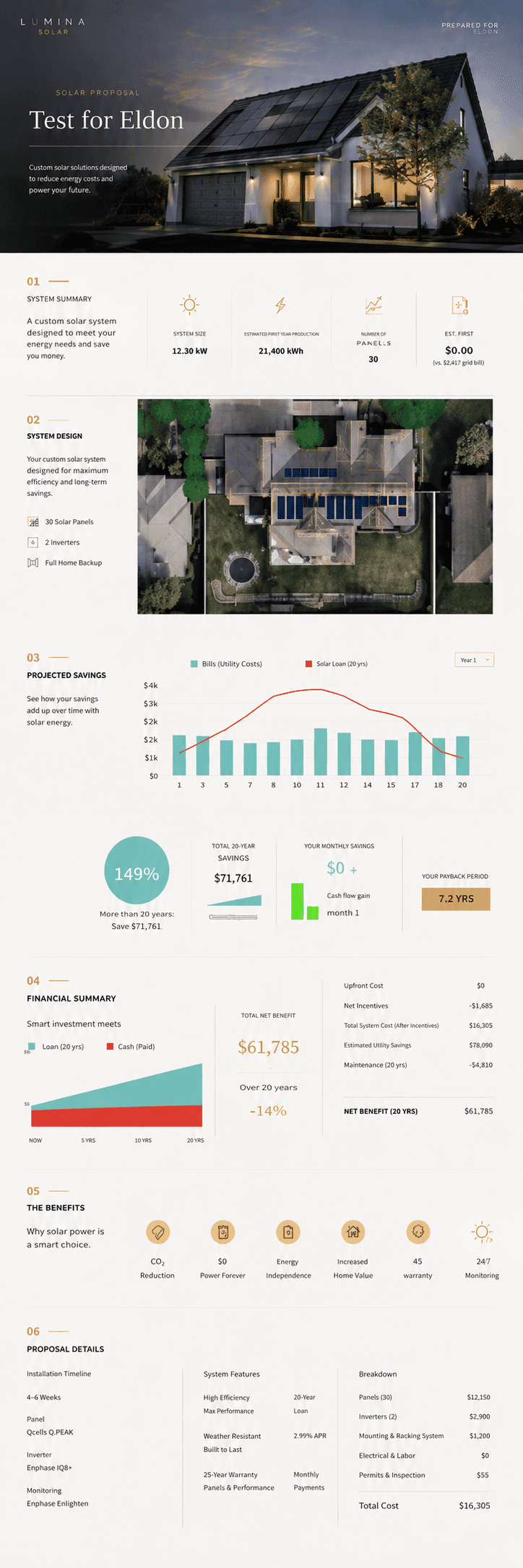
Designing a real-time proposal experience for live solar sales conversations.
Solo’s proposal experience had to support a complex sales moment: system design, homeowner education, financing, customization, and trust.
I helped move the proposal from a static document toward a real-time selling tool. The updated experience gave reps more control during live conversations while making system value, savings, production, and financing easier for homeowners to understand.
The work focused on simplifying the structure, clarifying key decision points, and creating a flexible proposal system that could adapt to different customers, sales teams, and scenarios without breaking the experience.
A faster proposal experience and a stronger design foundation.
Product outcomes:
- Helped shift Solo’s proposal experience from static output to real-time sales tool.
- Improved clarity around system design, savings, production, and homeowner value.
- Reduced friction during live sales conversations.
- Created reusable UX patterns for a more scalable product experience.
- Supported a more flexible proposal system that could adapt to different customers and sales scenarios.
Team outcomes:
- Helped build and lead the UX team.
- Established a stronger design library and shared product language.
- Created more consistency across proposal-related experiences.
- Helped mature the way design worked with product, engineering, and sales stakeholders.

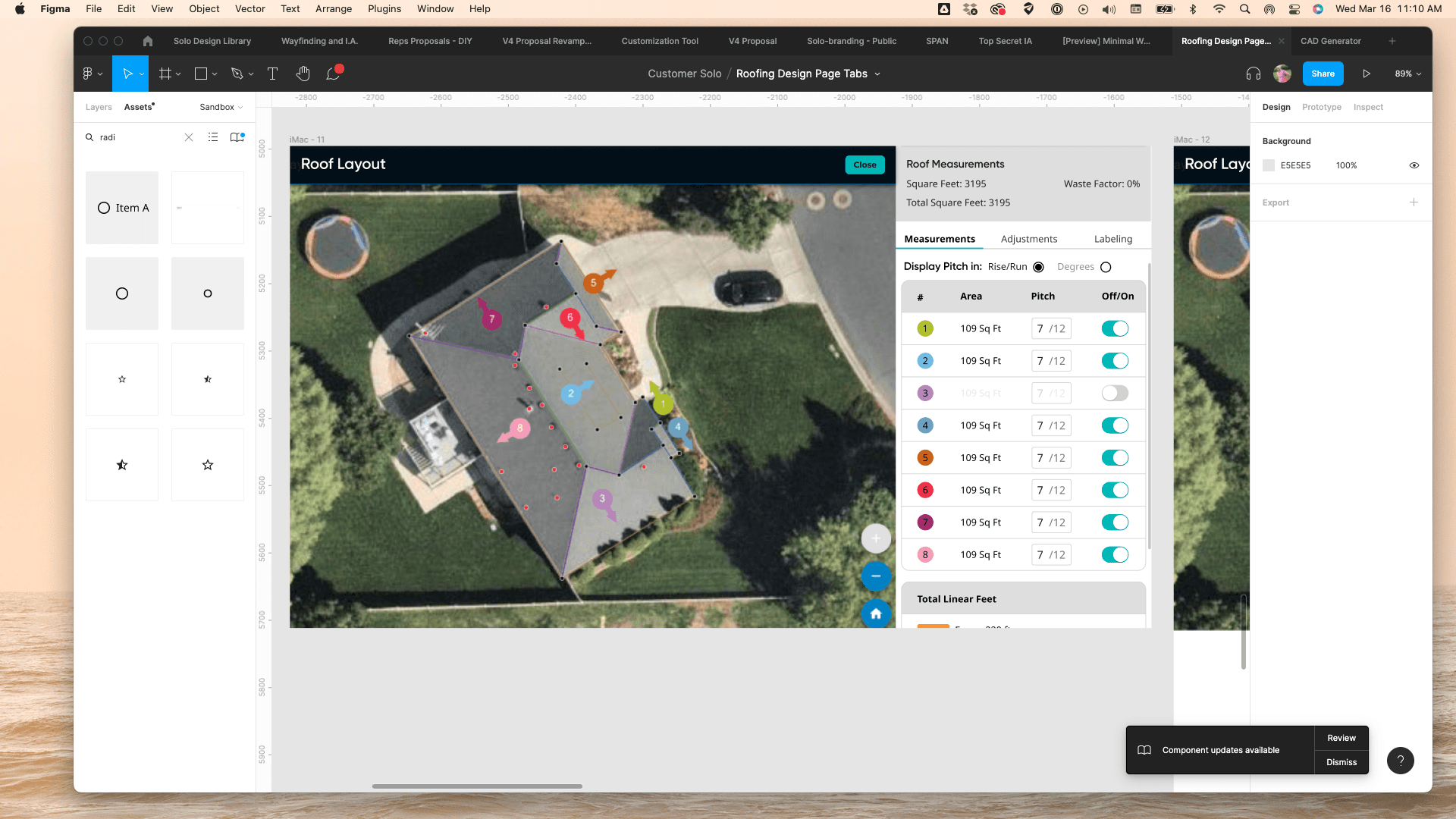
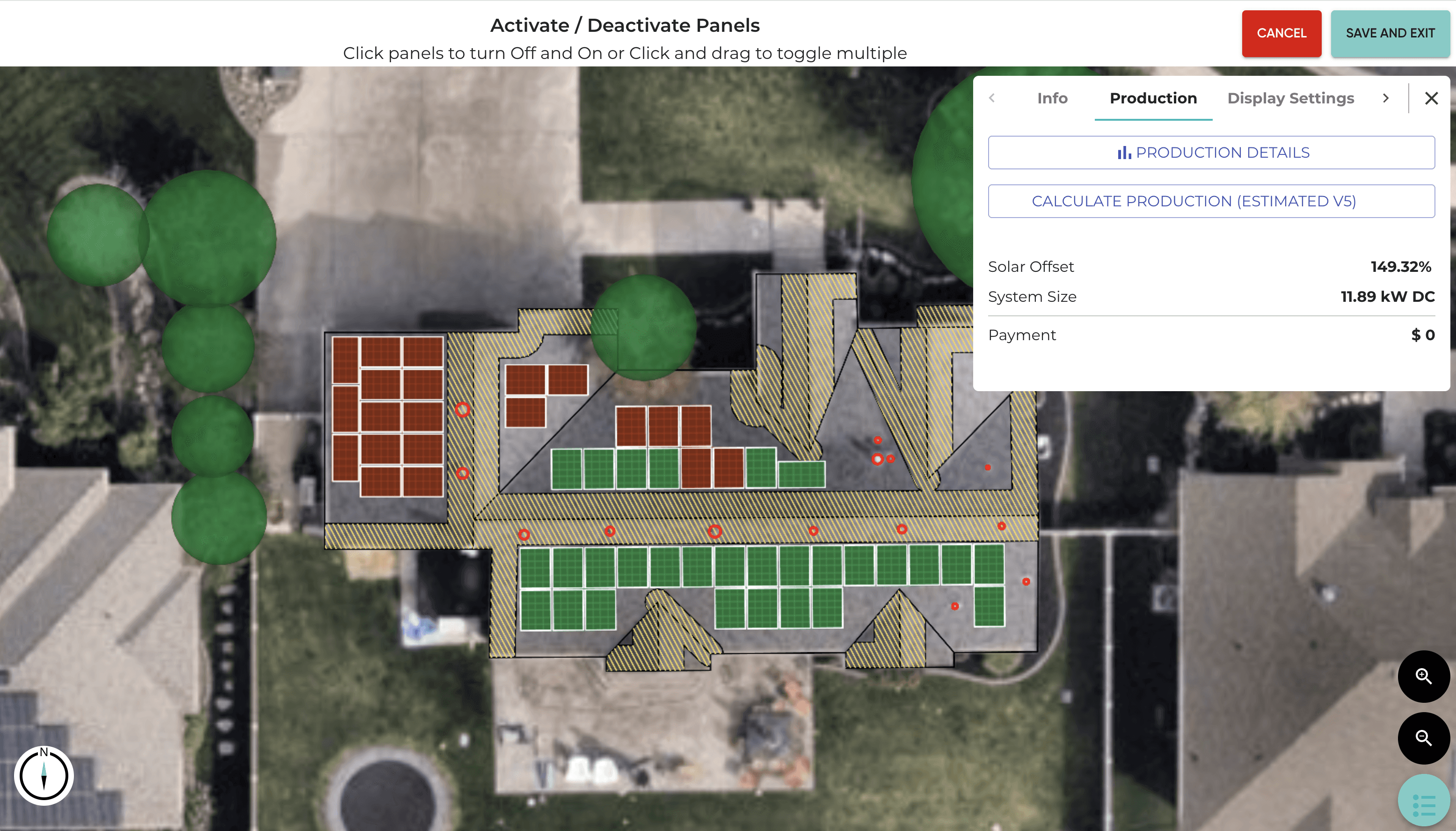

Strengthening the sales experience and the system behind it.
The work strengthened both the customer-facing proposal experience and the internal design foundation behind it.
For sales reps, the proposal became faster, clearer, and easier to adapt during live conversations. For homeowners, the experience made solar system design, savings, production, and financing easier to understand. For Solo, the design library and UX team structure created a stronger foundation for future product growth.
The proposal was not the end of the sales process. It was the conversation itself.
The biggest unlock was realizing that the proposal was not the end of the sales process. It was the conversation itself.
By designing for speed, clarity, and trust, we helped sales reps guide homeowners through complex decisions in real time. By building reusable patterns and a stronger UX foundation, we also helped Solo scale the product beyond a single proposal flow.
This project sharpened how I think about product design leadership: the best design work does not just improve screens. It improves the system, the team, and the customer’s ability to make a confident decision.